
 EN
EN



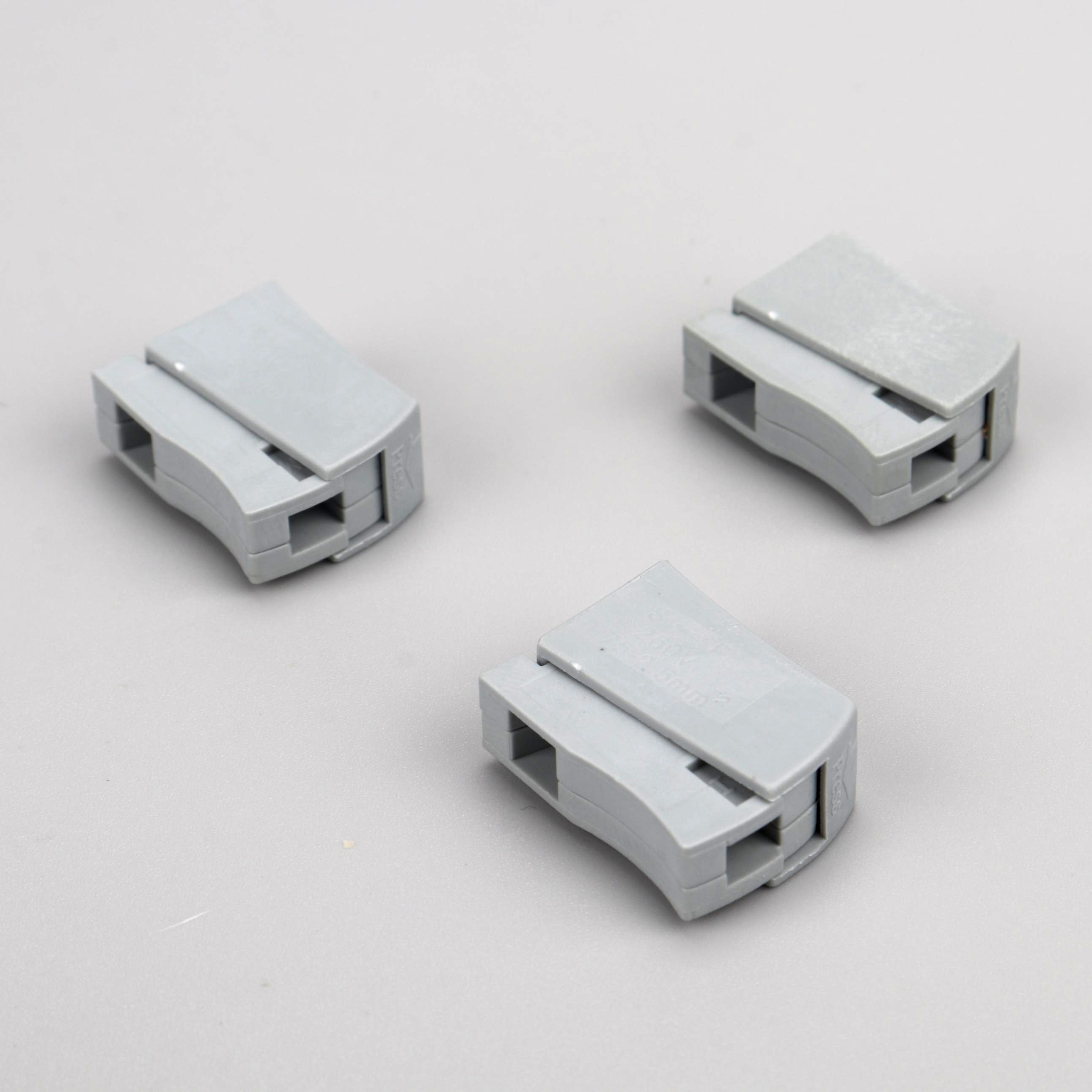
In modern electronic systems where data transmission speeds reach gigahertz frequencies and beyond, maintaining signal integrity becomes a critical engineering challenge. Board to board connectors serve as the physical interface between separate circuit boards, creating pathways for electrical signals to traverse between components. As signal frequencies increase, these interconnection points become potential bottlenecks where signal degradation, reflection, crosstalk, and impedance mismatches can compromise system performance. Understanding how board to board connectors preserve signal fidelity in high-speed applications requires examining the sophisticated design principles, material selections, and manufacturing techniques that enable reliable data transmission in demanding electronic environments.
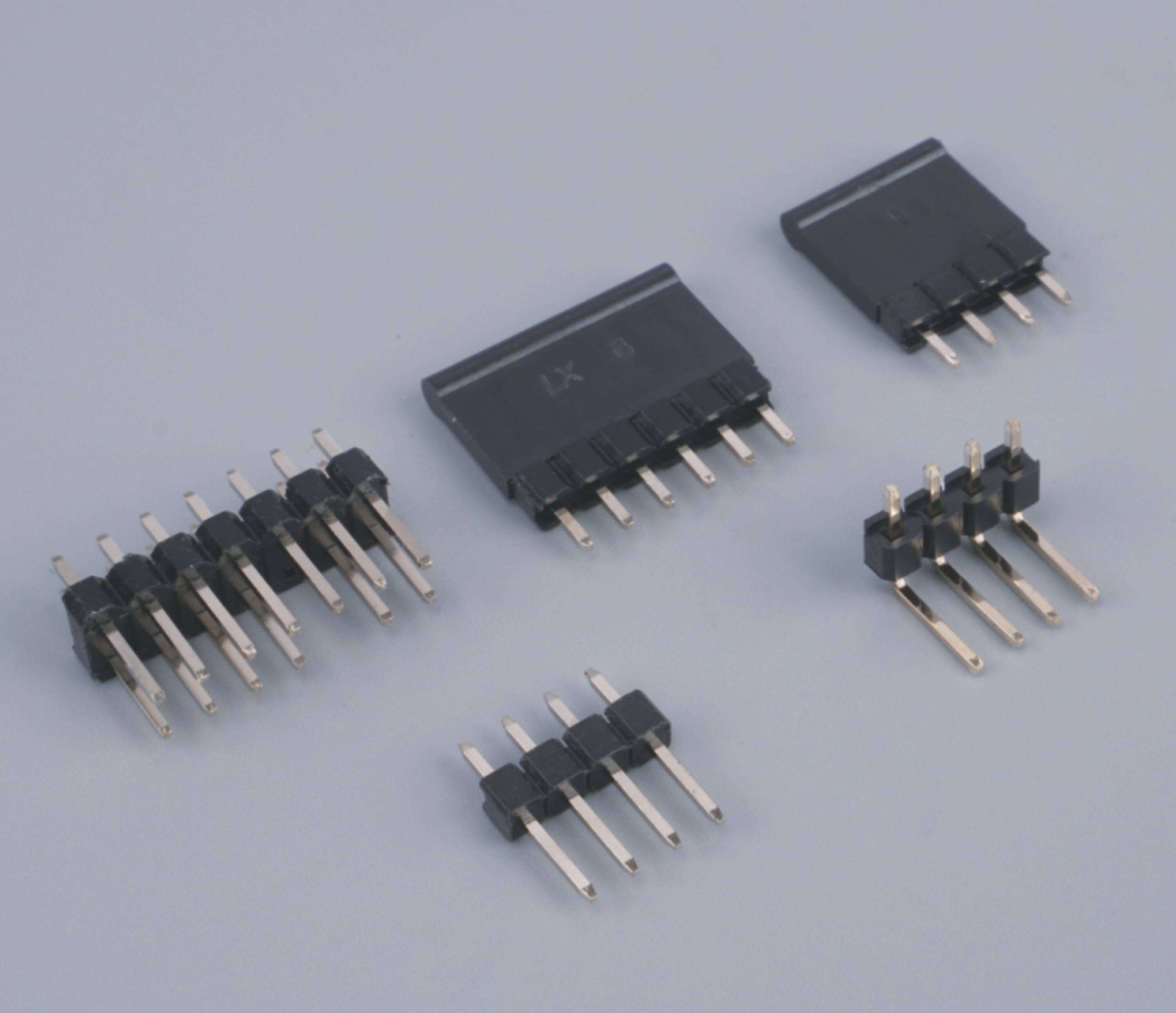
The mechanism through which board to board connectors maintain signal integrity involves multiple interdependent factors working in concert to minimize signal distortion and preserve waveform quality. These connectors must address electromagnetic challenges including controlled impedance throughout the signal path, minimized stub lengths, reduced capacitive and inductive loading, effective shielding from electromagnetic interference, and precise mechanical tolerances to ensure consistent electrical performance. Each design element contributes to the overall ability of the connector system to support high-speed digital signals without introducing timing errors, voltage fluctuations, or data corruption that would degrade system reliability.
Controlled Impedance Architecture in Connector Design
Impedance Matching Fundamentals for High-Speed Signals
The foundation of signal integrity in board to board connectors begins with controlled impedance engineering throughout the entire signal path. High-speed digital circuits typically operate with characteristic impedances of fifty or one hundred ohms, and any deviation from these target values creates reflection points where signal energy bounces back toward the source. Advanced board to board connectors incorporate precise geometric controls in their contact architecture to maintain consistent impedance from the printed circuit board trace through the connector body and into the mating board. This requires careful calculation of conductor spacing, dielectric material properties, and ground plane proximity to create a transmission line environment within the connector structure itself.
Manufacturers achieve impedance control through computational electromagnetic modeling that simulates signal behavior across the three-dimensional connector geometry. These simulations identify areas where impedance discontinuities might occur and guide design modifications to minimize transitions. The contact pins in quality board to board connectors feature carefully dimensioned cross-sections and consistent spacing that maintains the target impedance value throughout the mating interface. When impedance remains stable across the connection, signal reflections are minimized, reducing voltage standing wave ratio and preserving signal amplitude and timing characteristics essential for reliable high-speed data transmission.
Differential Pair Routing and Signal Symmetry
Modern high-speed communication protocols increasingly rely on differential signaling, where data is encoded as the voltage difference between two complementary conductors rather than as a single-ended signal referenced to ground. Board to board connectors designed for these applications must maintain tight coupling between differential pairs while providing consistent impedance for both the positive and negative signal lines. The physical arrangement of contacts within the connector housing positions differential pairs adjacent to each other with precise spacing that maintains the differential impedance specification, typically around one hundred ohms for differential pairs or eighty-five to ninety ohms depending on the application standard.
Signal symmetry becomes equally important in differential applications, as any imbalance between the two conductors in a pair converts common-mode noise into differential-mode signals that appear as data errors. Quality board to board connectors achieve symmetry through matched electrical lengths for both conductors in each pair, identical contact geometries, and symmetrical ground plane relationships. This balanced approach ensures that both signals in the differential pair experience identical electrical environments, maintaining the phase relationship and amplitude balance that differential receivers depend upon for accurate signal recovery. The symmetry extends through the entire mating cycle, ensuring that impedance and coupling characteristics remain stable even as the connector experiences repeated insertion and removal cycles.
Minimizing Parasitic Effects Through Contact Design
Stub Length Reduction and Signal Path Optimization
One of the most significant sources of signal degradation in board to board connectors involves stub effects, where unused portions of the contact create branching transmission lines that introduce reflections and resonances. In traditional through-hole connector designs, the portion of the contact pin extending beyond the board connection point acts as an unterminated transmission line stub that reflects signal energy at frequencies where the stub length approaches a quarter wavelength. Modern board to board connectors address this challenge through shortened contact designs, surface-mount terminations, and via-in-pad constructions that minimize or eliminate stub lengths entirely.
The electrical impact of stubs becomes increasingly severe as signal frequencies rise, with resonances creating frequency-dependent impedance variations that distort signal waveforms and introduce timing uncertainty. Engineers designing board to board connectors for gigabit-per-second data rates employ several strategies to mitigate stub effects, including back-drilling techniques that remove unused via barrels, differential via configurations that share return paths, and optimized contact geometries that minimize the physical length of any unavoidable stubs. Some advanced connector systems incorporate mid-board mounting approaches that eliminate through-hole vias completely, creating direct surface-mount connections that provide the shortest possible signal paths with minimal parasitic inductance and capacitance.
Capacitive and Inductive Loading Management
Every physical structure in an electrical circuit introduces some level of parasitic capacitance and inductance, and board to board connectors present particular challenges in this regard due to their complex three-dimensional geometries and the proximity of multiple conductors. Parasitic capacitance between adjacent signal pins, between signal pins and ground structures, and within the contact mating interface creates low-pass filtering effects that attenuate high-frequency signal components and round signal edges. Similarly, parasitic inductance in the contact springs and conductor paths creates series impedance that can cause voltage droops during fast signal transitions and introduces resonances that affect frequency response.
Mitigating these parasitic effects requires careful attention to contact geometry, material selection, and grounding architecture within the connector design. Manufacturers of precision board to board connectors minimize contact mass to reduce inductance, optimize pin spacing to control capacitive coupling, and incorporate grounding pins adjacent to signal conductors to provide low-impedance return paths that reduce loop inductance. The contact force and geometry are engineered to create sufficient mechanical pressure for reliable electrical connection while minimizing the contact area that contributes to capacitance. Advanced simulation tools allow designers to characterize these parasitic elements and optimize the connector structure to minimize their impact on signal integrity across the frequency range of interest.
Electromagnetic Shielding and Crosstalk Prevention
Ground Pin Placement and Return Path Optimization
Effective electromagnetic shielding begins with strategic ground pin placement throughout the connector pinout. Board to board connectors designed for high-speed applications intersperse ground contacts among signal contacts, creating isolated signal channels that prevent electromagnetic coupling between adjacent data lines. This ground-signal-ground or ground-signal-signal-ground arrangement provides each signal with a nearby return path that confines the electromagnetic field and reduces the loop area through which external noise can couple. The ratio of ground pins to signal pins in quality high-speed board to board connectors often approaches one-to-one or even favors additional ground contacts to ensure adequate shielding effectiveness.
The return path architecture extends beyond simple ground pin placement to encompass the entire current loop formed by the signal and its return conductor. High-speed signals require low-inductance return paths that follow the signal conductor closely, minimizing the enclosed loop area and reducing both radiated emissions and susceptibility to external interference. Board to board connectors facilitate this through ground structures that maintain proximity to signal paths throughout the connector body, including ground shells, internal ground planes, and strategically positioned ground contacts. When properly implemented, these return path optimizations reduce crosstalk between adjacent channels by twenty to thirty decibels or more compared to unshielded connector designs, enabling closer signal spacing and higher connector density without sacrificing signal integrity.
Shielding Structures and EMI Containment
Beyond ground pin placement, many board to board connectors incorporate physical shielding structures that provide additional electromagnetic isolation. Metal shells surrounding the connector housing create Faraday cage effects that contain electromagnetic fields and prevent external interference from coupling into sensitive signal paths. These shields connect to the system ground plane through multiple points to ensure low-impedance bonds that remain effective across a broad frequency spectrum. The shield design must address both electric field coupling, which is mitigated through conductive barriers, and magnetic field coupling, which requires careful attention to eddy current paths and shield material permeability.
For particularly demanding applications, board to board connectors may employ compartmentalized shielding that isolates individual signal groups or differential pairs within separate shielded chambers. This approach provides maximum isolation between channels and prevents crosstalk even in dense connector configurations carrying dozens or hundreds of high-speed signals. The shielding effectiveness depends on shield continuity, with particular attention paid to seams, gaps, and the interface between mating connector halves where electromagnetic energy might leak. Quality board to board connectors maintain shield continuity through spring fingers, conductive gaskets, or overlapping metal structures that ensure electrical contact across the mating interface, preserving shielding effectiveness even as the connectors experience mechanical vibration or thermal cycling in operational environments.
Mechanical Precision and Contact Reliability
Dimensional Tolerances and Mating Consistency
The electrical performance of board to board connectors depends fundamentally on mechanical precision, as contact alignment, engagement depth, and normal force directly affect electrical resistance, impedance consistency, and long-term reliability. Tight manufacturing tolerances ensure that mating contacts engage properly without misalignment, stubbing, or incomplete insertion that would degrade electrical performance. Modern board to board connectors achieve positional tolerances measured in hundredths of millimeters, ensuring that hundreds of contacts mate simultaneously with consistent engagement across all pin positions. This precision requires sophisticated tooling, precision molding processes, and rigorous quality control throughout manufacturing.
Mating consistency extends to the contact force profile across the entire connector array, as variations in contact pressure create impedance variations that can affect signal integrity. Board to board connectors employ spring contact designs that provide consistent normal force despite manufacturing variations and maintain stable contact resistance through repeated mating cycles. The contact geometry must balance the need for adequate force to penetrate surface oxides and maintain gas-tight connections against the practical limits of insertion force for large pin-count connectors. Advanced contact designs incorporate compound spring geometries that provide stable force characteristics across a range of engagement depths, accommodating board-to-board spacing variations while maintaining electrical performance specifications.
Contact Material Selection and Surface Treatments
Material selection for contact surfaces critically influences both signal integrity and long-term reliability of board to board connectors. Base materials must provide excellent electrical conductivity, mechanical spring properties, and resistance to plastic deformation over repeated mating cycles. Copper alloys with specific temper and grain structure provide the mechanical properties needed for reliable spring contacts, while surface treatments address oxidation, fretting corrosion, and contact resistance stability. Gold plating remains the standard for high-reliability board to board connectors, providing a noble metal surface that resists oxidation and maintains low, stable contact resistance through thousands of mating cycles.
The thickness and quality of surface treatments directly impact electrical performance in high-speed applications. Thin gold plating over nickel barrier layers provides cost-effective protection for moderate-use applications, while thicker gold deposits or selective gold plating on contact areas ensures maximum reliability in demanding environments. Alternative platings including palladium-nickel alloys offer cost advantages while maintaining excellent electrical properties and durability. Beyond the contact interface itself, board to board connectors must address the entire current path from the PCB connection through the contact spring to the mating point, ensuring that material transitions, plating thickness variations, and mechanical joints do not introduce unacceptable resistance or impedance discontinuities that would compromise signal integrity.
Design Verification and Performance Validation
Simulation and Modeling Techniques
Validating signal integrity performance of board to board connectors begins with comprehensive electromagnetic simulation during the design phase. Three-dimensional electromagnetic field solvers model the connector geometry, calculating S-parameters that characterize insertion loss, return loss, and crosstalk across the frequency spectrum of interest. These simulations reveal potential problem areas such as impedance discontinuities, resonances, or coupling mechanisms that might not be apparent from simple circuit models. Engineers iterate the connector design based on simulation results, adjusting contact geometry, spacing, and grounding arrangements to optimize performance before committing to expensive tooling and prototype production.
Advanced modeling approaches combine electromagnetic simulation with thermal analysis, mechanical stress simulation, and signal integrity analysis at the system level. Thermal modeling ensures that contact resistance and material properties remain stable across the operating temperature range, while mechanical simulations verify that contact forces and engagement characteristics meet specifications despite material tolerances and assembly variations. System-level signal integrity analysis places the connector models within complete signal chains, evaluating performance in the context of PCB traces, integrated circuit drivers and receivers, and other system elements. This comprehensive approach to validation ensures that board to board connectors perform reliably in actual application environments rather than simply meeting isolated component specifications.
Physical Testing and Measurement Methods
Physical testing of board to board connectors employs specialized test fixtures and high-frequency measurement equipment to validate electrical performance across the specified frequency range. Vector network analyzers measure S-parameters of connector samples mounted in controlled-impedance test boards, providing empirical data on insertion loss, return loss, and near-end and far-end crosstalk. Time-domain reflectometry reveals impedance discontinuities and identifies specific locations within the connector structure where impedance deviations occur. Eye diagram analysis and bit error rate testing with actual high-speed data patterns verify that board to board connectors support the required data rates with adequate signal quality margins.
Comprehensive validation programs subject board to board connectors to environmental testing including thermal cycling, vibration, shock, and durability testing through thousands of mating cycles. These tests verify that electrical performance remains within specification despite mechanical and thermal stresses encountered in actual applications. Salt spray testing, mixed flowing gas exposure, and accelerated aging protocols assess long-term reliability and contact resistance stability. For mission-critical applications, connector manufacturers perform design of experiments studies that characterize performance sensitivity to manufacturing variations, ensuring that production connectors consistently meet signal integrity requirements despite normal process variations in dimensions, materials, and assembly parameters.
FAQ
What frequency range do high-speed board to board connectors typically support?
Modern board to board connectors designed for high-speed applications support signal frequencies ranging from several hundred megahertz to beyond twenty gigahertz, with some specialized designs operating into the millimeter-wave frequency range above thirty gigahertz. The usable frequency range depends on connector geometry, pin pitch, material properties, and grounding architecture. Connectors with tighter pin spacing and more sophisticated impedance control support higher frequencies, while larger, higher pin-count connectors typically have lower maximum operating frequencies. The practical frequency limit is often defined by insertion loss specifications, with connectors required to maintain acceptable signal amplitude across the frequency spectrum used by the specific communication protocol.
How does pin count affect signal integrity in board to board connectors?
Increasing pin count in board to board connectors introduces several signal integrity challenges including increased crosstalk opportunities between adjacent signals, greater potential for ground bounce and simultaneous switching noise, and larger physical dimensions that can create longer signal paths and more significant impedance discontinuities. However, modern connector designs mitigate these effects through strategic ground pin placement that scales with signal pin count, providing adequate shielding regardless of connector size. Proper ground-to-signal pin ratios maintain isolation even in high pin-count configurations, while differential signaling techniques reduce sensitivity to common-mode noise sources. Connectors with hundreds of pins can achieve excellent signal integrity when designed with appropriate shielding, impedance control, and return path optimization.
What role does the PCB stackup play in board to board connector signal integrity?
The printed circuit board stackup significantly influences overall signal integrity in systems using board to board connectors, as the connector electrical performance cannot be separated from the transmission line characteristics of the PCB traces feeding the connector. Controlled impedance PCB traces must maintain their target impedance values right up to the connector pad, requiring careful management of reference plane transitions, via geometries, and pad designs. The ground plane structure in the PCB should align with the connector grounding architecture to provide low-inductance return paths. Multi-layer stackups with dedicated ground and power planes support better signal integrity than simple two-layer boards by providing consistent reference planes and reduced power distribution impedance that minimizes simultaneous switching noise affecting connector performance.
Can board to board connectors support both high-speed signals and power delivery simultaneously?
Yes, many board to board connectors combine high-speed signal contacts with dedicated power and ground contacts within the same housing, providing both data connectivity and power distribution in a single mechanical interface. This mixed-signal approach requires careful design to prevent power supply noise from coupling into sensitive signal paths. Power contacts typically employ larger conductor cross-sections to handle higher currents, while signal contacts are optimized for impedance control and minimal parasitic effects. Strategic placement separates high-speed signals from power contacts, with ground contacts providing isolation barriers. Separate ground pins for power return and signal return help prevent power supply transients from affecting signal integrity. When properly designed, hybrid power-and-signal board to board connectors deliver excellent performance for both power and data, simplifying system architecture and reducing connector count.
Table of Contents
- Controlled Impedance Architecture in Connector Design
- Minimizing Parasitic Effects Through Contact Design
- Electromagnetic Shielding and Crosstalk Prevention
- Mechanical Precision and Contact Reliability
- Design Verification and Performance Validation
-
FAQ
- What frequency range do high-speed board to board connectors typically support?
- How does pin count affect signal integrity in board to board connectors?
- What role does the PCB stackup play in board to board connector signal integrity?
- Can board to board connectors support both high-speed signals and power delivery simultaneously?

