
 EN
EN



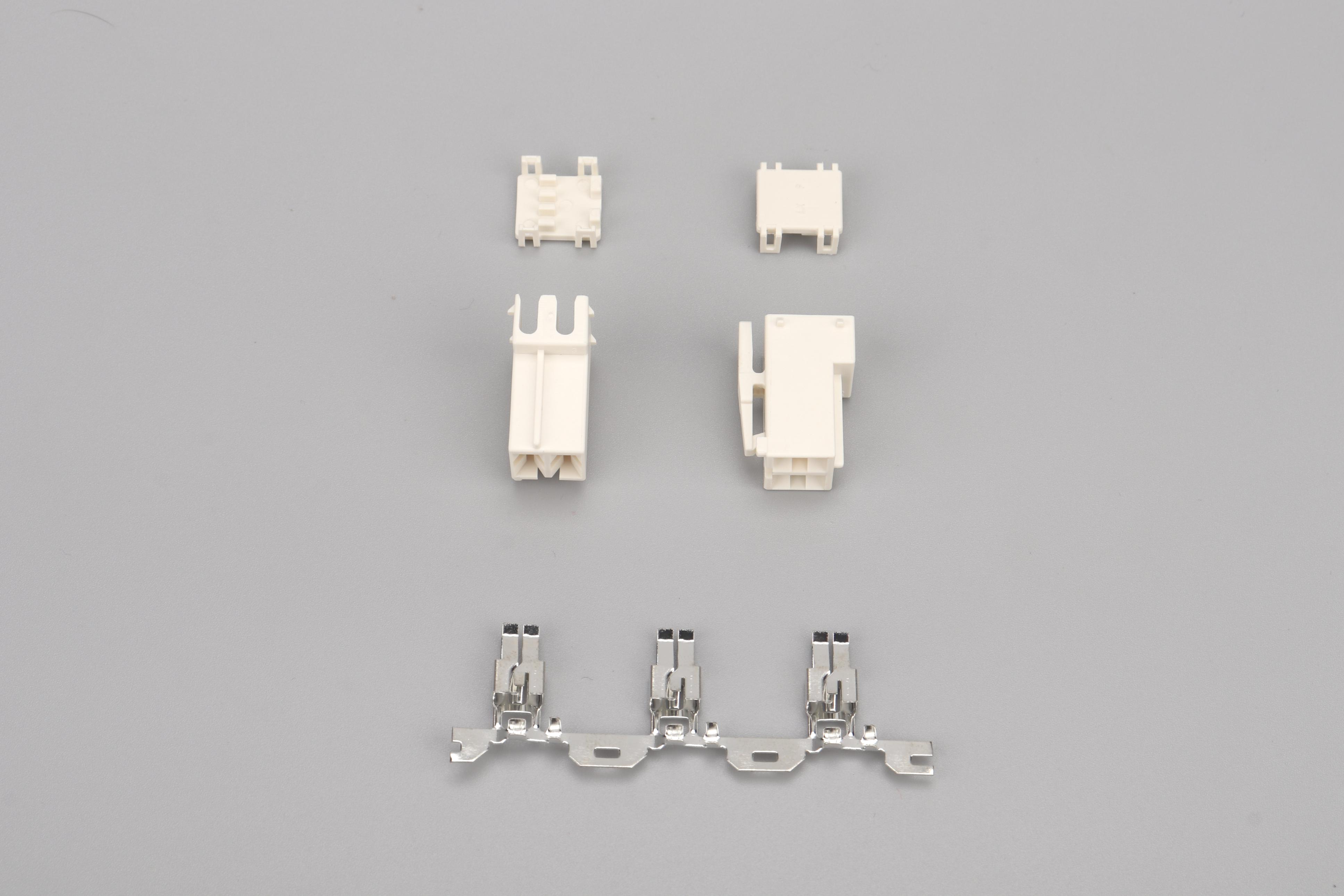
Manufacturing environments demand precise electrical connections that maintain signal integrity, mechanical stability, and operational reliability under challenging conditions. When evaluating quality standards for board to board connectors, manufacturers must assess multiple technical parameters that directly impact production efficiency, product longevity, and overall system performance. Understanding these evaluation criteria enables informed decision-making that prevents costly failures and ensures consistent manufacturing outcomes.
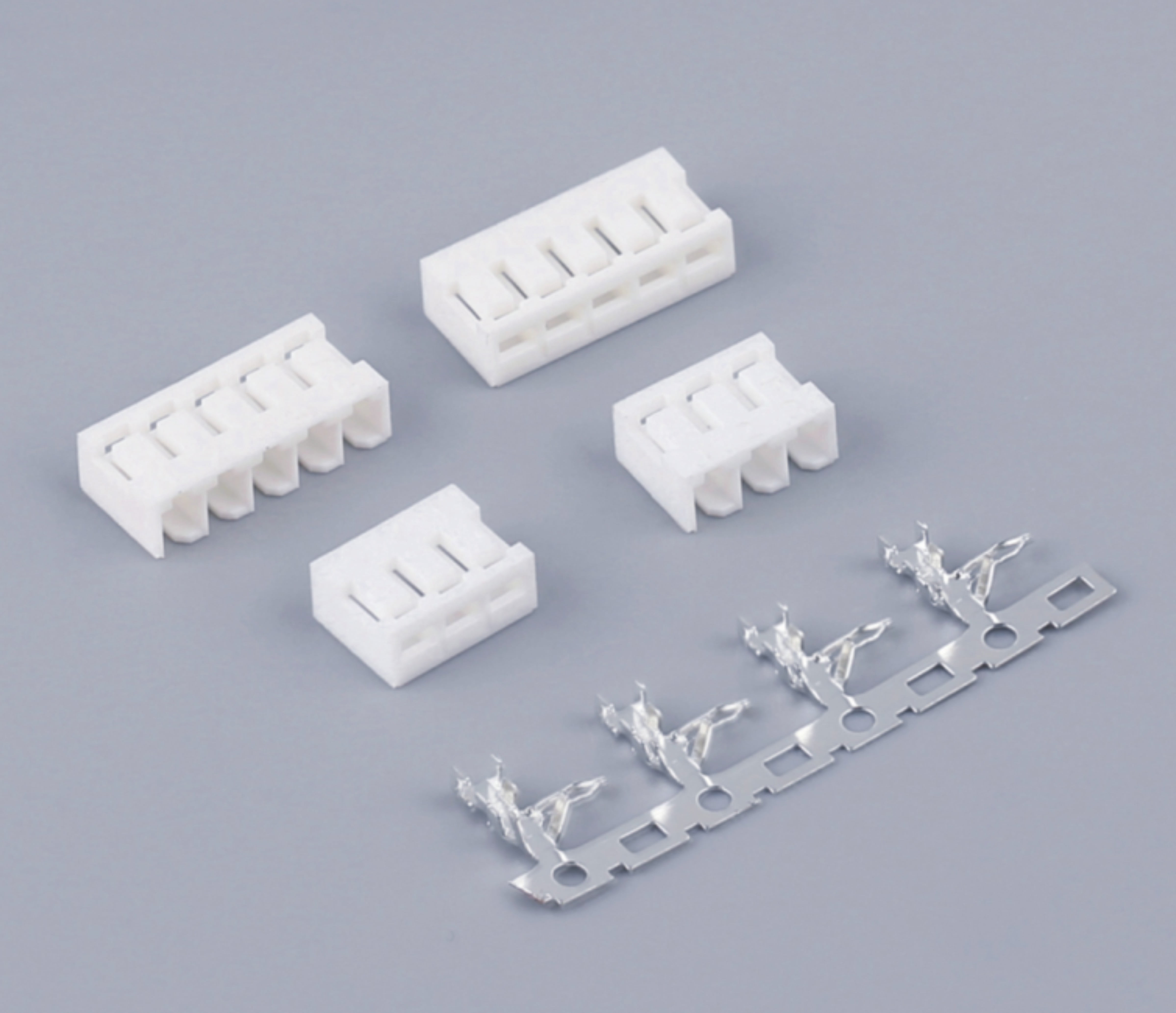
Quality evaluation for board to board connectors requires systematic assessment across electrical, mechanical, and environmental performance parameters. Manufacturing engineers must establish clear benchmarks that align with specific application requirements, production volumes, and operational environments. This comprehensive evaluation approach helps identify connectors that deliver consistent performance while minimizing maintenance requirements and potential system disruptions throughout their operational lifespan.
Electrical Performance Standards Assessment
Contact Resistance and Signal Integrity Verification
Contact resistance measurement serves as a fundamental indicator of electrical quality in board to board connectors. Manufacturing applications typically require contact resistance values below 20 milliohms to ensure reliable signal transmission and minimize voltage drop across connections. Engineers should verify these measurements under both initial installation conditions and after extended operational periods to assess long-term performance stability.
Signal integrity evaluation encompasses impedance matching, crosstalk reduction, and transmission line characteristics that affect high-speed digital communications. Quality board to board connectors maintain consistent impedance values across their operational frequency range while minimizing signal degradation through proper conductor spacing and dielectric material selection. Testing protocols should include time-domain reflectometry and frequency-domain analysis to validate signal integrity performance.
Insertion loss characteristics determine how much signal strength decreases as electrical signals pass through the connector interface. Manufacturing environments often require insertion loss values below 0.5 dB at operational frequencies to maintain adequate signal strength for downstream components. This parameter becomes increasingly critical in high-frequency applications where signal attenuation can compromise system functionality.
Current Carrying Capacity and Thermal Management
Current carrying capacity evaluation involves testing board to board connectors under maximum rated current conditions while monitoring temperature rise and thermal stability. Quality connectors should handle rated current loads without exceeding temperature limits that could degrade contact materials or surrounding components. Temperature coefficient testing reveals how electrical parameters change across the specified operating temperature range.
Thermal cycling tests simulate repeated heating and cooling cycles that occur during normal manufacturing operations. These tests evaluate contact stability, material expansion compatibility, and long-term electrical performance under temperature variations. Quality standards should specify thermal cycling parameters that match actual manufacturing environment conditions to ensure realistic performance assessment.
Power dissipation analysis determines how efficiently board to board connectors handle electrical energy without generating excessive heat that could affect nearby components. This evaluation includes measuring power losses across contact interfaces and assessing thermal management effectiveness through connector design features such as heat dissipation paths and material thermal conductivity.
Mechanical Durability and Reliability Testing
Insertion and Withdrawal Force Specifications
Insertion force measurement determines the mechanical effort required to properly mate board to board connectors during assembly operations. Manufacturing environments benefit from connectors with consistent insertion forces that enable reliable automated assembly while preventing damage to circuit boards or connector housings. Quality standards should specify acceptable insertion force ranges that accommodate both manual and automated assembly processes.
Withdrawal force testing evaluates the mechanical retention strength that prevents accidental disconnection during operation, vibration, or maintenance activities. Adequate withdrawal force ensures board to board connectors remain securely mated throughout their operational lifespan while allowing intentional disconnection when required. This parameter directly impacts system reliability in manufacturing environments subject to mechanical stress.
Mating cycle testing determines how many connection and disconnection cycles board to board connectors can withstand before experiencing performance degradation. Manufacturing applications may require thousands of mating cycles for maintenance and reconfiguration activities. Quality evaluation should include testing beyond minimum cycle requirements to establish safety margins for extended operational use.
Vibration and Shock Resistance Validation
Vibration testing simulates mechanical stresses encountered in manufacturing environments with moving machinery, transportation, and operational equipment. Board to board connectors must maintain electrical continuity and mechanical integrity when subjected to specified vibration frequencies and amplitudes. Testing protocols should reflect actual vibration profiles present in the intended manufacturing application.
Shock resistance evaluation assesses connector performance under sudden mechanical impacts that may occur during equipment operation, maintenance, or handling. Quality board to board connectors should withstand shock loads without experiencing contact interruption, mechanical damage, or permanent deformation that affects future performance. Shock testing helps identify design weaknesses that could lead to field failures.
Mechanical stress analysis includes evaluating connector housing strength, contact spring properties, and assembly tolerance compatibility. These factors determine how well board to board connectors accommodate manufacturing variations while maintaining consistent electrical and mechanical performance. Quality standards should address stress concentration areas and material fatigue resistance under repeated loading conditions.
Environmental Compatibility and Material Standards
Temperature Range and Thermal Stability Assessment
Operating temperature range evaluation determines the environmental conditions under which board to board connectors can function reliably without performance degradation. Manufacturing environments often expose connectors to temperature variations from equipment heat generation, seasonal changes, and process-related thermal cycling. Quality assessment should verify performance across the full specified temperature range with appropriate safety margins.
Thermal stability testing evaluates how connector materials and electrical characteristics respond to extended exposure at elevated temperatures. This includes assessing contact material stability, insulator performance, and dimensional stability under thermal stress. Board to board connectors in manufacturing applications must maintain their specifications throughout extended high-temperature exposure periods.
Thermal shock testing subjects connectors to rapid temperature changes that simulate real-world conditions where equipment moves between different thermal environments. These tests reveal material compatibility issues, expansion mismatch problems, and potential failure modes that may not appear during steady-state temperature testing. Quality standards should include thermal shock parameters representative of actual manufacturing conditions.
Chemical Resistance and Environmental Protection
Chemical resistance evaluation determines how board to board connectors respond to exposure to cleaning agents, process chemicals, and environmental contaminants commonly present in manufacturing facilities. Contact materials, housing plastics, and sealing materials must resist chemical attack that could compromise electrical performance or mechanical integrity over time.
Humidity resistance testing assesses connector performance under high moisture conditions that may occur in manufacturing environments with varying climate control or process-related humidity. Board to board connectors should maintain electrical performance and resist corrosion when exposed to specified humidity levels for extended periods. This testing helps identify potential moisture-related failure modes.
Contamination resistance evaluation determines how well board to board connectors perform when exposed to dust, particulates, and other airborne contaminants typical in manufacturing environments. Quality connectors should maintain electrical continuity and mechanical operation despite exposure to specified contamination levels. Sealing effectiveness and self-cleaning contact action contribute to contamination resistance performance.
Manufacturing Integration and Assembly Considerations
Dimensional Accuracy and Tolerance Management
Dimensional accuracy assessment ensures board to board connectors maintain precise physical dimensions that enable consistent assembly operations and reliable electrical connections. Manufacturing processes require connectors with tight dimensional tolerances to accommodate automated assembly equipment and ensure proper mating with corresponding circuit board layouts. Quality evaluation should verify dimensional stability across production lots and environmental conditions.
Tolerance stack-up analysis determines how dimensional variations in connectors, circuit boards, and assembly processes interact to affect overall connection reliability. Board to board connectors must accommodate reasonable manufacturing tolerances while maintaining electrical performance and mechanical integrity. This analysis helps identify potential assembly issues before they impact production operations.
Coplanarity measurement evaluates how well connector contacts align within specified planes to ensure uniform contact pressure and electrical performance across all connection points. Poor coplanarity can result in inconsistent contact resistance, intermittent connections, and premature wear in board to board connectors. Quality standards should specify acceptable coplanarity limits based on application requirements.
Process Compatibility and Automation Readiness
Assembly process compatibility evaluation determines how well board to board connectors integrate with existing manufacturing processes, including automated pick-and-place equipment, soldering operations, and quality inspection procedures. Connectors should accommodate standard manufacturing processes without requiring specialized equipment or modified procedures that increase production complexity.
Automation readiness assessment includes evaluating connector packaging, handling characteristics, and orientation features that enable reliable automated assembly operations. Board to board connectors designed for manufacturing environments should include features that facilitate automated handling while minimizing the risk of incorrect orientation or assembly errors that could compromise system performance.
Quality control integration involves establishing inspection procedures and acceptance criteria that can be implemented within existing manufacturing quality systems. This includes defining visual inspection criteria, electrical testing procedures, and documentation requirements that support traceability and quality assurance objectives throughout the manufacturing process.
FAQ
What electrical parameters are most critical when evaluating board to board connectors for manufacturing applications?
Contact resistance, current carrying capacity, and signal integrity represent the most critical electrical parameters for manufacturing applications. Contact resistance should typically remain below 20 milliohms to ensure reliable signal transmission, while current carrying capacity must exceed maximum operational requirements with appropriate safety margins. Signal integrity parameters become increasingly important in high-frequency applications where impedance matching and insertion loss directly affect system performance.
How do environmental conditions in manufacturing facilities affect connector quality requirements?
Manufacturing environments expose board to board connectors to temperature variations, humidity, vibration, and chemical contaminants that can degrade performance over time. Quality evaluation must consider these environmental factors by testing connectors under conditions that simulate actual manufacturing environments. Temperature cycling, chemical resistance, and contamination testing help identify connectors that maintain performance despite challenging environmental conditions.
What mechanical testing procedures best predict long-term reliability in manufacturing applications?
Mating cycle testing, vibration resistance, and thermal cycling provide the most reliable indicators of long-term mechanical performance in manufacturing environments. These tests simulate the mechanical stresses and operational conditions that board to board connectors experience during normal use. Testing should exceed minimum requirements to establish safety margins that account for variations in actual operating conditions and ensure consistent performance throughout the connector's operational lifespan.
How can manufacturers balance connector quality requirements with cost considerations?
Effective quality evaluation focuses on parameters that directly impact the specific manufacturing application while avoiding over-specification that increases costs without providing proportional benefits. Manufacturers should establish quality requirements based on actual operational conditions, performance requirements, and reliability expectations. This targeted approach ensures adequate quality while optimizing cost-effectiveness for board to board connectors in manufacturing applications.
Table of Contents
- Electrical Performance Standards Assessment
- Mechanical Durability and Reliability Testing
- Environmental Compatibility and Material Standards
- Manufacturing Integration and Assembly Considerations
-
FAQ
- What electrical parameters are most critical when evaluating board to board connectors for manufacturing applications?
- How do environmental conditions in manufacturing facilities affect connector quality requirements?
- What mechanical testing procedures best predict long-term reliability in manufacturing applications?
- How can manufacturers balance connector quality requirements with cost considerations?

