
 EN
EN



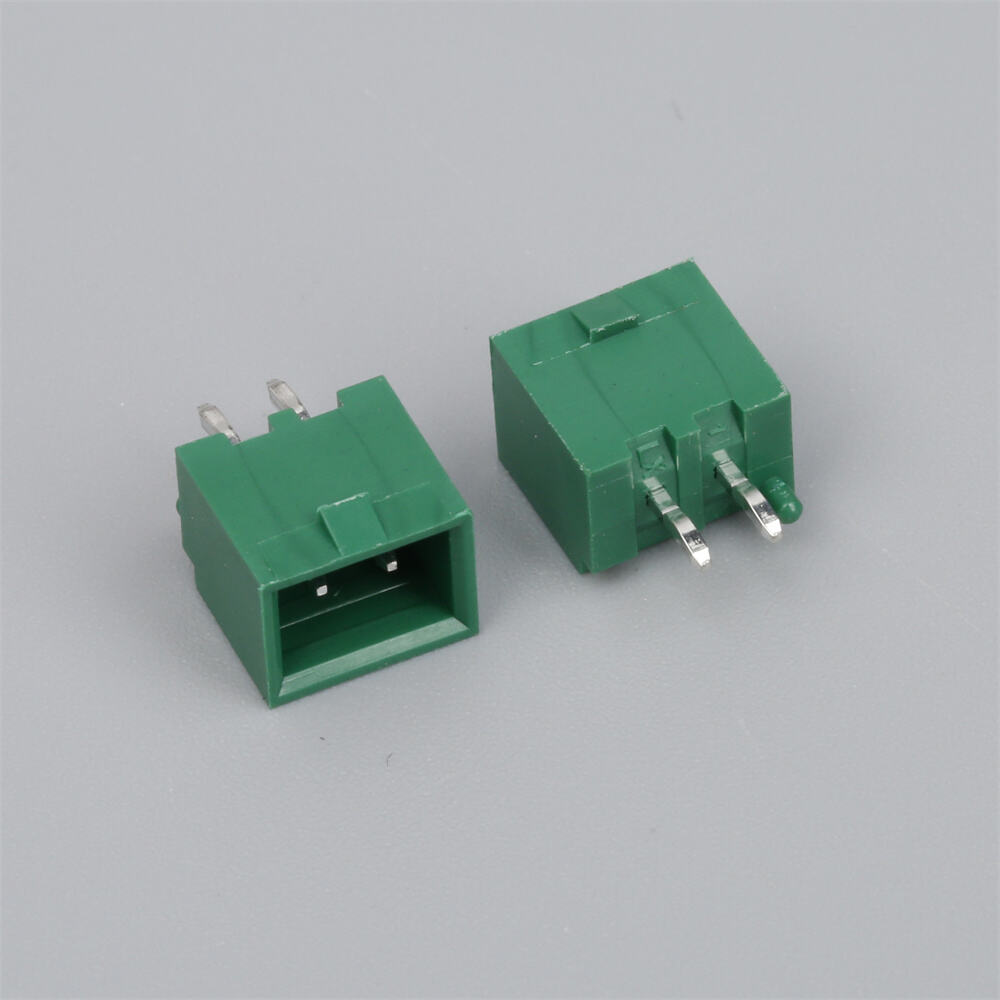
In the intricate world of electrical engineering, the reliability of connections defines the success or failure of countless applications. From industrial automation systems to consumer electronics, the components that create these connections must deliver consistent performance under demanding conditions. Among these essential elements, pin terminals stand as fundamental building blocks that enable secure, precise, and durable electrical contact points. Understanding what pin terminals are and recognizing their critical role in modern electrical systems provides engineers, designers, and technical professionals with the knowledge necessary to make informed decisions about component selection and system architecture.
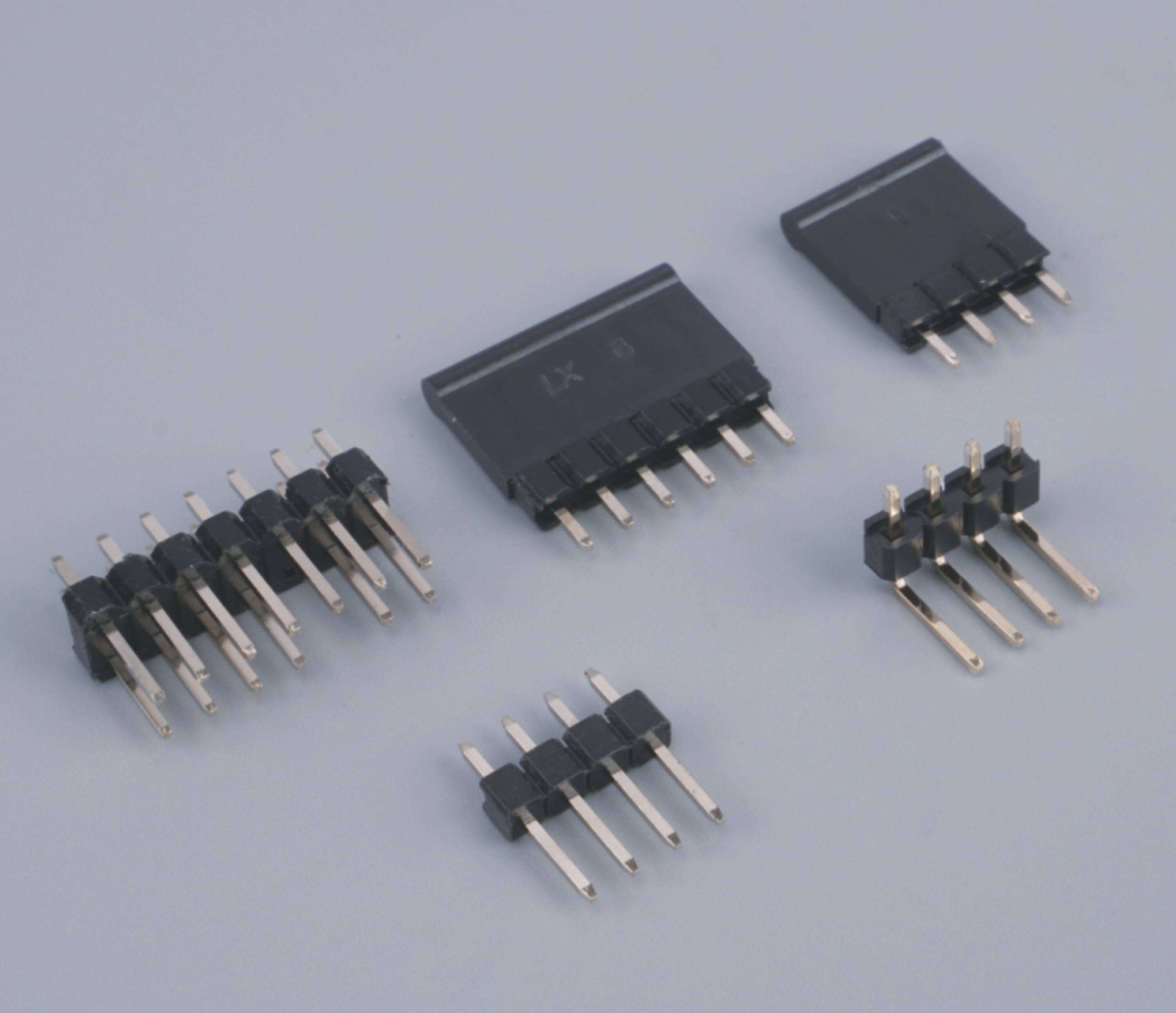
Pin terminals serve as the interface between circuit boards and external components, creating pathways for electrical signals and power distribution. Their design combines mechanical precision with electrical conductivity, ensuring that current flows reliably while maintaining structural integrity throughout the operational lifetime of the equipment. The vital importance of these components extends beyond simple connectivity—they influence system performance, maintenance efficiency, manufacturing scalability, and long-term reliability. This article explores the fundamental nature of pin terminals, examines their construction and varieties, and explains why they remain indispensable in contemporary electrical engineering practice across diverse industries and application contexts.
Understanding the Fundamental Nature of Pin Terminals
Core Definition and Physical Characteristics
Pin terminals are conductive connector components characterized by their cylindrical or rectangular pin-shaped geometry, designed to establish electrical contact by inserting into corresponding receptacles or through-holes. These components typically consist of a metal pin section manufactured from copper alloys, phosphor bronze, or brass, often finished with tin, gold, or nickel plating to enhance conductivity and corrosion resistance. The pin portion extends from a mounting base that may take various forms depending on the terminal type, including surface-mount pads, through-hole solder tails, or integrated housing structures. The precision manufacturing of pin terminals ensures consistent dimensions that meet tight tolerance specifications, which is essential for reliable mating with corresponding female connectors or socket contacts.
The geometry of pin terminals directly influences their electrical and mechanical performance. Pin diameter, length, and tip configuration are carefully engineered to balance insertion force with contact pressure, ensuring secure connections without excessive mechanical stress that could damage circuit boards or mating components. The contact surface area between the pin and its receptacle determines the electrical resistance of the connection, with larger contact areas generally providing lower resistance and better current-carrying capacity. Engineers must consider these physical characteristics when selecting pin terminals for specific applications, matching the component specifications to the electrical requirements and mechanical constraints of the target system.
Material Composition and Conductive Properties
The material selection for pin terminals represents a critical engineering decision that affects both electrical performance and mechanical durability. Copper alloys dominate the market due to their excellent electrical conductivity, typically offering conductivity ratings between 85% and 100% IACS (International Annealed Copper Standard). Phosphor bronze alloys provide superior spring characteristics and mechanical strength, making them ideal for applications requiring repeated insertion and removal cycles. Brass alloys offer a balance between conductivity, cost, and machinability, finding widespread use in high-volume manufacturing environments where economic efficiency matters alongside technical performance.
Surface plating significantly enhances the performance characteristics of pin terminals beyond the base metal properties. Tin plating provides excellent solderability and adequate corrosion resistance for most standard applications, while gold plating delivers superior contact reliability and resistance to oxidation in demanding environments. Nickel underplating often precedes gold plating to prevent base metal migration and provide additional hardness. The plating thickness must be carefully controlled—typical specifications range from 0.76 to 2.54 microns for tin and 0.5 to 2.5 microns for gold—balancing cost considerations against the required durability and environmental protection. These material and plating choices directly impact the contact resistance, insertion durability, and long-term reliability of pin terminals in their intended applications.
Classification Systems and Terminal Categories
Pin terminals are classified according to multiple criteria that reflect their diverse applications and mounting methods. By mounting technology, they divide into through-hole pin terminals that require drilling and insertion through printed circuit boards, and surface-mount variants that attach directly to board surfaces using reflow soldering processes. Through-hole types offer superior mechanical strength and pull-out resistance, making them preferred for applications subject to vibration or mechanical stress, while surface-mount versions support higher-density board layouts and automated assembly processes. The choice between these fundamental categories influences board design, manufacturing workflow, and overall system robustness.
Another classification approach categorizes pin terminals by their functional arrangement and housing integration. Single-pin terminals exist as individual components for custom interconnection solutions, while pin header assemblies integrate multiple pins in standardized pitch configurations, typically at 2.54mm (0.1 inch) or 2.0mm spacing. These multi-pin configurations may be single-row, dual-row, or multi-row arrangements, with pin counts ranging from two to several hundred positions. Board-to-board connectors, wire-to-board connectors, and input/output connectors all utilize pin terminals as their fundamental contact elements, with the housing design and pin arrangement optimized for specific interconnection requirements. Understanding these classification systems helps engineers navigate the extensive variety of available pin terminals and select components that align precisely with their application needs.
The Critical Importance of Pin Terminals in Electrical Systems
Foundation of Reliable Electrical Connectivity
Pin terminals establish the fundamental electrical pathways that enable complex systems to function as integrated units. In industrial control panels, these components create the connections between programmable logic controllers, sensor inputs, and actuator outputs, forming the nervous system of automated manufacturing processes. The reliability of each individual pin terminal connection directly affects overall system uptime—a single failed connection can halt entire production lines or create safety hazards in critical applications. This foundational role makes pin terminals vital infrastructure components rather than mere auxiliary hardware, demanding rigorous quality standards and appropriate specification for each unique application context.
The electrical integrity provided by properly specified pin terminals extends beyond simple conductivity to encompass signal quality considerations essential in modern electronic systems. In high-speed data transmission applications, the impedance characteristics and electromagnetic properties of pin terminals influence signal integrity, with poor-quality terminals potentially introducing reflections, crosstalk, or attenuation that degrades communication reliability. The contact resistance of pin terminals—typically specified in the range of 10 to 30 milliohms—directly impacts power distribution efficiency and voltage drop in power delivery networks. Engineers designing systems carrying significant current loads must carefully calculate the cumulative resistance of all connection points to ensure voltage regulation remains within acceptable tolerances, highlighting why pin terminals receive careful attention during the design validation phase.
Enabling Modular System Architecture
Pin terminals enable the modular design philosophy that characterizes contemporary electrical and electronic systems, allowing equipment manufacturers to create products composed of interchangeable subassemblies. This modularity streamlines manufacturing by supporting parallel production of system components, reduces inventory complexity through standardization, and simplifies field service by enabling replacement of failed modules rather than entire systems. Connector systems based on pin terminals make this modular approach practical by providing mechanical and electrical interfaces that ensure compatibility across different production batches and design iterations. Without reliable pin terminal technology, the economic and operational advantages of modular architecture would be difficult or impossible to achieve.
The standardization enabled by pin terminals extends beyond individual product lines to facilitate industry-wide compatibility and ecosystem development. Standardized pin header configurations allow third-party suppliers to develop compatible expansion boards, peripheral devices, and accessories that extend base system capabilities without requiring custom interconnection solutions. In embedded computing platforms, standardized pin terminals create expansion interfaces that have spawned entire markets of add-on modules, accelerating innovation by allowing specialized developers to focus on specific functionality while relying on proven interconnection technology. This ecosystem effect multiplies the value of well-designed pin terminal interfaces far beyond their direct technical function, positioning them as strategic enablers of market development and technology adoption.
Supporting Manufacturing Efficiency and Scalability
Pin terminals significantly influence manufacturing efficiency through their compatibility with automated assembly processes and their impact on production yield. Through-hole pin terminals support wave soldering and selective soldering processes that enable rapid, repeatable assembly of populated circuit boards. Surface-mount pin terminals integrate seamlessly with pick-and-place machinery and reflow soldering systems, enabling high-volume production with minimal manual intervention. The mechanical self-alignment properties of properly designed pin terminals reduce placement accuracy requirements and improve first-pass yield, directly impacting manufacturing cost per unit and production capacity. These manufacturing considerations make pin terminals an important factor in product development decisions, influencing not only technical performance but also competitive positioning through cost structure optimization.
The design of pin terminals also affects quality assurance processes and long-term manufacturing consistency. Components with well-defined inspection criteria and testability features enable automated optical inspection and electrical testing that verify assembly quality without extensive manual intervention. Pin terminals with consistent dimensional tolerances and plating characteristics reduce process variation and improve statistical process control capabilities. For manufacturers pursuing quality certifications or supplying regulated industries such as medical devices or aerospace systems, the traceability and quality documentation associated with pin terminals becomes a vital consideration. Selecting terminals from suppliers with robust quality management systems and comprehensive material certifications helps ensure compliance with industry standards and regulatory requirements throughout the product lifecycle.
Application Domains Where Pin Terminals Prove Essential
Industrial Automation and Control Systems
Industrial environments subject pin terminals to demanding conditions including temperature extremes, vibration, chemical exposure, and electromagnetic interference, making component selection particularly critical. In factory automation systems, pin terminals connect sensors monitoring production parameters, actuators controlling mechanical processes, and communication interfaces linking distributed control elements. The reliability of these connections directly impacts production efficiency and product quality, with connection failures potentially causing costly downtime or manufacturing defects. Industrial-grade pin terminals designed for these applications incorporate enhanced mechanical retention, wider operating temperature ranges (typically -40°C to +125°C), and superior plating systems that resist corrosion from industrial atmospheres.
The modularity enabled by pin terminals proves especially valuable in industrial contexts where equipment must be maintained, upgraded, or reconfigured to accommodate changing production requirements. Standardized terminal blocks and connector systems based on pin terminal technology allow technicians to disconnect and reconnect equipment during maintenance procedures without specialized tools or extensive training. This serviceability reduces mean time to repair and minimizes production interruptions associated with equipment failures. Additionally, the ability to upgrade control systems by replacing individual modules connected via pin terminals extends equipment useful life and protects capital investments, providing economic benefits that extend throughout the operational lifetime of industrial installations.
Consumer Electronics and Computing Devices
Consumer electronics leverage pin terminals extensively to create compact, reliable interconnections within space-constrained enclosures. Smartphones, tablets, and laptops utilize fine-pitch pin terminals in board-to-board connectors that link display panels, battery modules, camera assemblies, and communication subsystems to main logic boards. The miniaturization trend in consumer electronics drives continuous development of smaller pin terminals with tighter pitch specifications, currently reaching 0.4mm pitch or even finer in advanced applications. These ultra-compact pin terminals must maintain electrical performance and mechanical reliability despite their reduced dimensions, requiring precision manufacturing capabilities and advanced materials that can deliver necessary strength at micro-scale geometries.
Computing platforms from embedded microcontrollers to server systems rely on pin terminals for expansion capabilities and system integration. Pin header interfaces on development boards and single-board computers provide general-purpose input/output connections, communication interfaces, and power distribution points that enable prototyping, customization, and peripheral attachment. In data center equipment, high-density pin terminal arrays create backplane interconnections that support hot-swappable server blades and storage modules, enabling maintenance without system shutdown. The electrical characteristics of these pin terminals must support high-speed signal protocols including PCIe, USB, and Ethernet standards, requiring careful impedance control and shielding considerations that distinguish advanced pin terminal designs from commodity components.
Transportation and Automotive Electronics
Automotive applications expose pin terminals to particularly challenging environmental conditions including wide temperature cycling, vibration from road conditions and engine operation, exposure to automotive fluids, and long-term reliability requirements spanning vehicle lifetimes measured in years or decades. Modern vehicles contain hundreds of electronic control units managing powertrain operation, safety systems, infotainment features, and connectivity functions, with each control unit depending on numerous pin terminal connections for power distribution, sensor inputs, and communication networks. Automotive-grade pin terminals incorporate design features specifically addressing these challenges, including enhanced retention mechanisms, sealed connector housings, and material specifications that resist degradation from temperature cycling and chemical exposure.
The transition toward electric vehicles and advanced driver assistance systems intensifies the importance of pin terminals in automotive applications. High-voltage battery systems require specialized pin terminals capable of safely conducting hundreds of amperes while maintaining isolation and fault protection. The proliferation of cameras, radar sensors, and lidar systems in autonomous vehicles creates new demands for pin terminals supporting high-bandwidth data transmission with electromagnetic compatibility in electrically noisy vehicle environments. As automotive architecture evolves toward centralized computing platforms and software-defined functionality, the reliability and performance of pin terminals connecting distributed sensors and actuators to central processing units becomes increasingly critical to vehicle safety and functionality, elevating these components from commodity hardware to safety-critical system elements requiring rigorous qualification and validation processes.
Technical Considerations for Pin Terminal Selection and Implementation
Electrical Parameter Matching and Current Capacity
Selecting appropriate pin terminals requires careful analysis of the electrical parameters that define system requirements and operating conditions. Current capacity represents a primary specification, with pin terminals rated for continuous current levels ranging from milliamps in signal applications to tens of amperes in power distribution contexts. The current rating depends on conductor cross-sectional area, material conductivity, contact resistance, and thermal dissipation characteristics. Engineers must consider not only steady-state current requirements but also transient conditions, inrush currents, and derating factors associated with elevated ambient temperatures or enclosed installations that limit convective cooling. Undersizing pin terminals relative to current demands leads to excessive voltage drop, heat generation, and accelerated degradation that compromises system reliability.
Voltage rating and dielectric strength constitute equally important electrical specifications, particularly in applications involving significant potential differences or requiring isolation between circuit sections. Pin terminals must maintain adequate spacing and insulation to prevent arc-over or breakdown under both normal operating voltages and transient overvoltage conditions. For applications subject to regulatory standards such as IEC or UL requirements, the voltage rating and creepage/clearance distances must meet specified safety criteria to ensure user protection and certification compliance. The impedance characteristics of pin terminals gain importance in high-frequency applications, where the inductance and capacitance of connection points can affect signal integrity and electromagnetic emissions. Matching these electrical parameters to application requirements ensures that pin terminals support rather than limit overall system performance.
Mechanical Interface Design and Mating Reliability
The mechanical design of pin terminals directly influences connection reliability through factors including insertion force, retention strength, and mating durability. Insertion force must be sufficient to ensure adequate contact pressure for low resistance and gas-tight connections, yet low enough to prevent damage to circuit boards or connector housings during assembly. Retention force determines the resistance to accidental disconnection from vibration, thermal cycling, or handling, with specifications typically ranging from several newtons for signal connectors to tens of newtons for power connections. The mating cycle rating indicates the number of insertion and removal operations the terminal can withstand before contact degradation exceeds acceptable limits, with specifications ranging from dozens of cycles for permanent installations to thousands of cycles for field-serviceable connectors.
The pin terminal tip geometry and plating characteristics significantly affect mating reliability and contact quality. Tapered or chamfered pin tips facilitate alignment and reduce insertion force by guiding the pin into the receptacle, minimizing the risk of bent pins or damaged contacts during assembly. The normal force between mating surfaces must generate sufficient contact pressure to penetrate surface films and establish metallic contact, while the contact area must be large enough to distribute current density and minimize localized heating. Surface plating selection influences both initial contact resistance and long-term stability—gold plating provides superior performance but at higher cost, while tin plating offers acceptable performance for most applications at lower material expense. Understanding these mechanical interface considerations helps engineers select pin terminals that deliver reliable performance throughout their intended operational lifetime.
Environmental Protection and Reliability Engineering
Environmental conditions significantly impact pin terminal performance and longevity, necessitating careful consideration of protection mechanisms and material selection. Temperature cycling causes expansion and contraction of materials with different thermal coefficients, potentially leading to connection loosening or stress accumulation that degrades contact quality. Humidity and condensation promote corrosion of contact surfaces, particularly on terminals with less noble plating materials, progressively increasing contact resistance and eventually causing open circuits. Chemical exposure from cleaning agents, industrial atmospheres, or process materials can attack plating layers or base metals, accelerating degradation. Selecting pin terminals with appropriate environmental ratings and protection features—including sealed connectors, conformal coatings, or noble metal platings—ensures compatibility with operational conditions.
Reliability engineering practices applied to pin terminal selection include failure mode and effects analysis, stress testing, and lifetime prediction modeling. Understanding potential failure mechanisms—including fretting corrosion from micro-motion, stress relaxation reducing contact force, or plating wear from repeated mating cycles—allows engineers to implement preventive measures or select components with enhanced resistance to anticipated degradation modes. Accelerated life testing under elevated temperature, humidity, or vibration conditions helps validate component selection and predict field reliability based on established acceleration models. For critical applications, derating guidelines recommend operating pin terminals well below their maximum ratings to provide margin against parameter variation and ensure adequate reliability under worst-case conditions. This systematic approach to reliability engineering transforms pin terminal selection from a component-level decision into an integral part of overall system reliability architecture.
FAQ
What distinguishes pin terminals from other types of electrical connectors?
Pin terminals are characterized by their male pin geometry designed for insertion into corresponding female receptacles, as opposed to socket contacts, blade terminals, or crimp connections. Their cylindrical or rectangular pin shape provides large contact surface area and self-centering properties that ensure reliable electrical connection with relatively loose positional tolerances. Unlike soldered wire connections that create permanent joints, pin terminals enable disconnectable interfaces that support modular system architecture and field serviceability. The standardized dimensions and pitch specifications of pin terminals facilitate interchangeability and compatibility across different manufacturers, distinguishing them from proprietary connector designs.
How do engineers determine the appropriate current rating for pin terminals in a specific application?
Current rating selection requires analyzing both the steady-state current requirements and transient conditions including startup inrush and fault currents. Engineers must consider the conductor cross-section, material conductivity, contact resistance, and thermal dissipation characteristics of the pin terminal and its surrounding environment. Standard practice involves derating the manufacturer's specified maximum current by 50-80% for continuous operation, with additional derating for elevated ambient temperatures or enclosed installations with limited airflow. Thermal analysis or testing under representative conditions validates that temperature rise remains within acceptable limits, typically keeping terminal temperature below 30°C above ambient to ensure long-term reliability and prevent degradation of surrounding materials.
What are the primary causes of pin terminal connection failures and how can they be prevented?
Common failure modes include fretting corrosion from micro-motion under vibration, oxidation of contact surfaces in humid environments, mechanical fatigue from repeated thermal cycling, and contact force relaxation over time. Prevention strategies include selecting terminals with appropriate plating for the environmental conditions—gold plating for superior corrosion resistance or tin plating with adequate thickness for standard applications. Proper mechanical design ensures adequate normal force maintains gas-tight contact, while retention mechanisms prevent loosening from vibration. Environmental sealing through conformal coatings or sealed connector housings protects against moisture ingress. Regular inspection and maintenance protocols identify degradation before failures occur, particularly in critical applications where connection reliability directly impacts safety or system availability.
Are pin terminals suitable for high-frequency signal transmission applications?
Pin terminals can support high-frequency applications when properly designed with controlled impedance and minimal discontinuities, though their suitability depends on the specific frequency range and signal integrity requirements. For frequencies below several hundred megahertz, standard pin terminals generally perform adequately with careful attention to ground return paths and minimizing stub lengths. Applications in the gigahertz range require specialized pin terminal designs with matched impedance, reduced pin inductance, and controlled dielectric properties. Differential signaling implementations using paired pin terminals provide enhanced noise immunity and support higher data rates than single-ended configurations. For very high frequency applications exceeding several gigahertz, alternative connector technologies such as coaxial or high-speed differential connectors may provide superior performance, though advanced pin terminal designs continue extending their applicable frequency range through ongoing engineering development.
Table of Contents
- Understanding the Fundamental Nature of Pin Terminals
- The Critical Importance of Pin Terminals in Electrical Systems
- Application Domains Where Pin Terminals Prove Essential
- Technical Considerations for Pin Terminal Selection and Implementation
-
FAQ
- What distinguishes pin terminals from other types of electrical connectors?
- How do engineers determine the appropriate current rating for pin terminals in a specific application?
- What are the primary causes of pin terminal connection failures and how can they be prevented?
- Are pin terminals suitable for high-frequency signal transmission applications?

