
 EN
EN



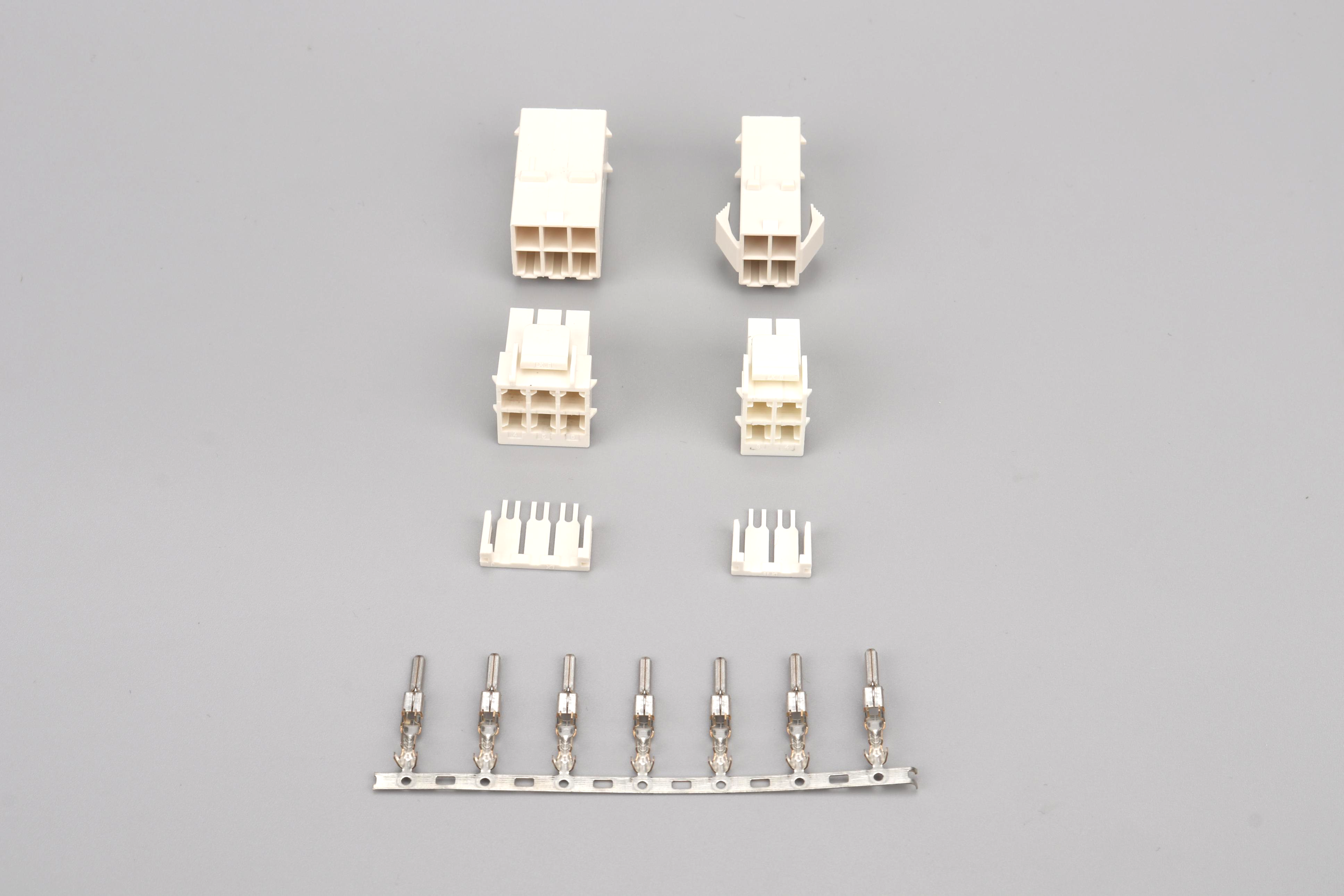
In the realm of electrical interconnection systems, the choice of terminal technology directly impacts performance, reliability, and operational efficiency, especially when dealing with high-current applications. Pin terminals have emerged as a critical component in power distribution systems, industrial machinery, renewable energy installations, and electric vehicle charging infrastructure where current loads exceed standard consumer electronics levels. Understanding the specific advantages that pin terminals offer in these demanding environments helps engineers and procurement professionals make informed decisions that balance electrical performance, mechanical durability, and long-term cost efficiency.
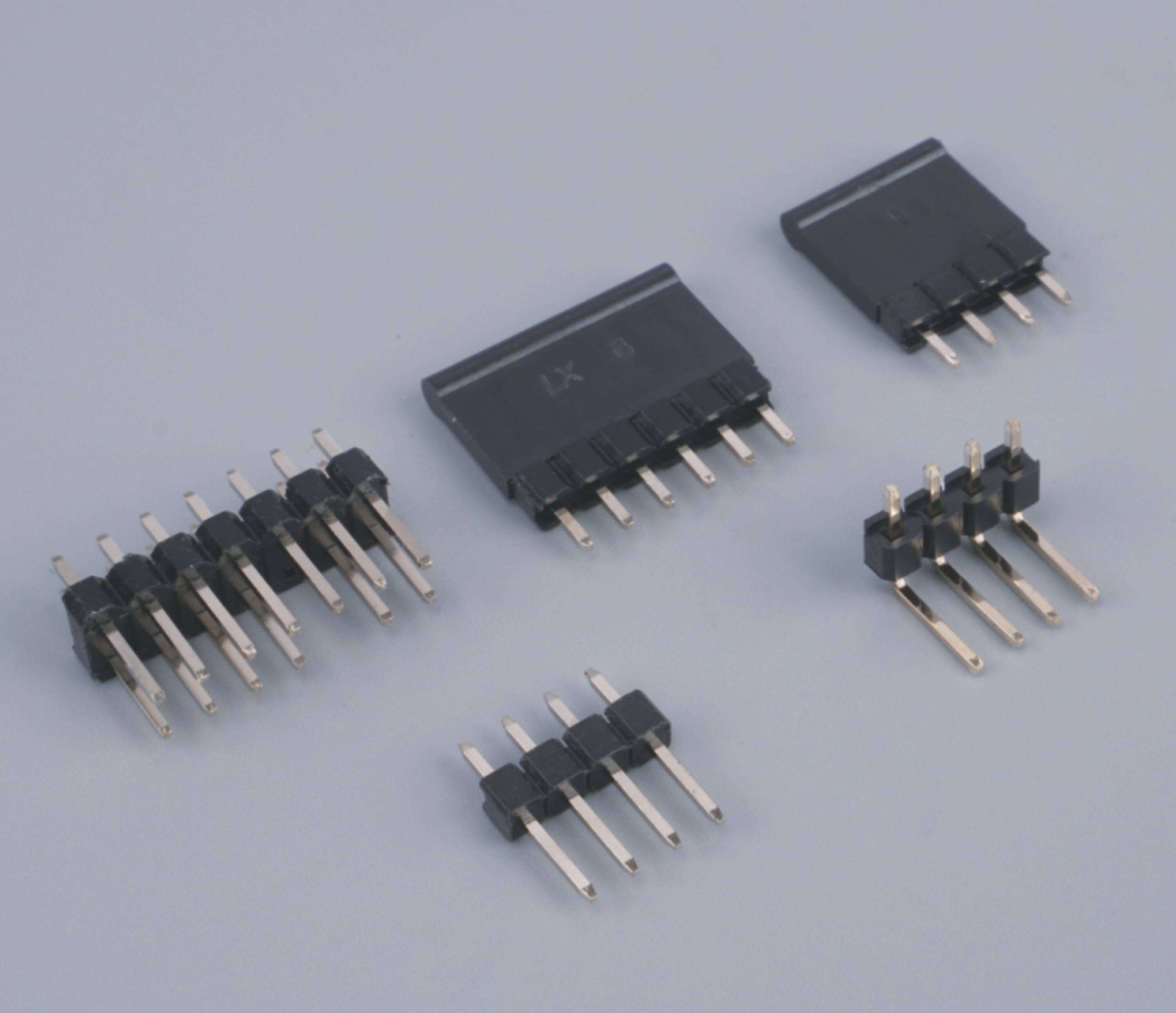
High-current applications present unique challenges that distinguish them from low-power signal transmission scenarios. When electrical current exceeds several amperes, considerations such as contact resistance, thermal management, connection stability under vibration, and material conductivity become paramount. Pin terminals address these challenges through their fundamental design characteristics, which include solid metal construction, substantial contact surface area, and mechanical configurations optimized for reliable current transfer. This article explores the multifaceted advantages that make pin terminals the preferred interconnection solution when electrical systems must reliably handle elevated current loads across industrial, automotive, energy, and heavy equipment sectors.
Superior Current-Carrying Capacity Through Design Optimization
Solid Conductor Architecture and Cross-Sectional Area
The fundamental advantage of pin terminals in high-current applications stems from their solid conductor architecture. Unlike stranded wire connections or thin stamped contacts, pin terminals typically feature machined or formed solid metal pins with substantial cross-sectional areas. This design characteristic directly correlates with current-carrying capacity according to the relationship between conductor cross-section and ampacity. Larger diameter pin terminals can handle proportionally higher current loads while maintaining acceptable temperature rise under continuous operation. In applications requiring 10 to 100 amperes or more, the solid construction of pin terminals provides a continuous conductive path without the internal air gaps or oxide formation points that can develop in stranded conductors over time.
The material selection for pin terminals further enhances their current-carrying performance. High-conductivity copper alloys, often with tin, silver, or gold plating, minimize resistive losses along the conductive path. When precision-engineered pin terminals are manufactured with controlled dimensions and surface finishes, they achieve contact resistance values measured in milliohms or even microohms. This low resistance translates directly to reduced power dissipation as heat, allowing higher current densities without exceeding thermal limitations of surrounding components or insulation materials. The combination of adequate cross-sectional area and superior conductivity materials makes pin terminals inherently suitable for power transmission roles.
Optimized Contact Interface Geometry
Beyond the pin itself, the mating interface geometry of pin terminals contributes significantly to their high-current capabilities. Quality pin terminal systems incorporate receptacles or sockets with spring-loaded contacts that create multiple contact points around the pin's circumference. This distributed contact pattern increases the effective contact area compared to single-point or line-contact designs. Greater contact area reduces current density at the interface, which is critical because localized high current density can cause hotspots, accelerated wear, and contact degradation. In practical terms, a well-designed pin terminal connection distributes 50 amperes across several square millimeters of contact surface rather than concentrating it at a single edge or point.
The contact pressure maintained by the receptacle design also plays a crucial role in high-current performance. Spring contacts or interference-fit designs apply consistent normal force across the contact interface, which minimizes contact resistance by breaking through surface oxides and ensuring metal-to-metal contact. This mechanical pressure remains relatively constant throughout the operational life of the connection, compensating for minor dimensional variations due to thermal cycling or mechanical stress. For pin terminals used in demanding environments, contact force specifications typically range from several hundred grams to several kilograms, depending on the current rating and pin diameter. This sustained contact pressure ensures that the low-resistance connection required for high-current applications is maintained across temperature fluctuations and operational cycles.
Thermal Management Through Material and Design Integration
When electrical current flows through any conductor, resistive heating occurs according to the power dissipation formula where heat generation equals current squared times resistance. Even with low-resistance pin terminals, high-current applications generate measurable heat that must be managed to prevent degradation of the terminal itself or surrounding components. Pin terminals offer inherent thermal management advantages through their material mass and thermal conductivity. The solid metal construction acts as a heat sink, absorbing thermal energy and distributing it along the length of the pin away from the contact interface. This thermal distribution reduces peak temperatures at the critical contact point where electrical energy transfer occurs.
Advanced pin terminals designed specifically for high-current applications often incorporate additional thermal management features such as increased pin diameter in high-heat zones, integrated heat spreaders, or materials with enhanced thermal conductivity. Some designs include provisions for direct thermal coupling to printed circuit board copper planes or external heat sinks, creating conductive thermal paths that remove heat from the electrical connection. In applications where continuous high-current operation is required, the ability to manage thermal energy effectively determines whether a connection will maintain its electrical integrity over time or suffer from thermal runaway, contact welding, or insulation failure. The robust construction and material properties of pin terminals provide significant advantages in these thermally challenging scenarios.
Enhanced Mechanical Stability and Connection Reliability
Vibration and Shock Resistance in Industrial Environments
High-current applications frequently occur in industrial settings where mechanical vibration, shock loading, and physical movement are common operational realities. Electrical connections in heavy machinery, transportation equipment, manufacturing systems, and power generation facilities must maintain electrical continuity despite continuous or intermittent mechanical disturbances. Pin terminals excel in these environments due to their mechanical design characteristics that resist disconnection and maintain contact pressure under dynamic loading. The interference fit or spring-loaded contact mechanism in pin terminal receptacles creates a mechanical lock that resists separation forces in multiple axes, unlike friction-dependent connections that may loosen under vibration.
The solid construction of pin terminals provides mechanical strength that prevents bending, deformation, or breakage under typical industrial handling and operational stresses. While thin stamped contacts or fragile spring contacts may fatigue or permanently deform after repeated mechanical stress cycles, properly specified pin terminals maintain their dimensional integrity and electrical performance. This mechanical robustness becomes particularly important in high-current applications where connection failure can result in arcing, overheating, or complete power system shutdown. The reliability of pin terminals under mechanical stress contributes directly to system uptime and reduces maintenance requirements in vibration-prone installations.
Mating Cycle Durability for Serviceable Systems
Many high-current applications require periodic disconnection for maintenance, equipment replacement, or system reconfiguration. The ability to mate and unmate connections repeatedly without degradation is essential in these serviceable systems. Pin terminals are specifically engineered for durability across hundreds or thousands of insertion and extraction cycles, depending on the quality grade and design specifications. The spring contact elements in receptacles are designed with material selection and geometry that maintain contact force even after repeated flexing, while the solid pin resists wear and dimensional changes that would increase contact resistance over time.
In contrast to soldered connections or crimped terminals that are essentially permanent, the reconnectable nature of pin terminals enables field service without specialized tools or skills. This serviceability advantage becomes economically significant in systems with modular components or upgradable subsystems. A power distribution system using pin terminals can accommodate component replacement, capacity upgrades, or reconfiguration with minimal downtime and without the thermal stress of soldering or the potential crimping errors that can compromise electrical performance. The combination of high mating cycle durability and ease of connection makes pin terminals particularly valuable in prototype development, testing environments, and production systems where configuration flexibility is required alongside high current-carrying capability.
Prevention of Contact Degradation Over Operational Life
Long-term reliability in high-current applications depends on maintaining low contact resistance throughout the operational life of the system. Contact degradation mechanisms such as fretting corrosion, oxidation, and mechanical wear can gradually increase resistance at the connection interface, leading to progressive heating, further degradation, and eventual connection failure. Pin terminals address these degradation mechanisms through several design features that preserve contact integrity. The maintained contact pressure created by spring contacts or interference fits ensures that mechanical contact is sustained despite minor surface irregularities or oxide formation. This pressure also creates a gas-tight seal at the contact interface that limits oxygen exposure and slows oxidation processes.
Surface finish selection for pin terminals plays a critical role in long-term performance. Tin plating provides a soft, easily deformable surface that facilitates initial contact formation and has self-healing properties where mechanical action breaks through oxide layers during insertion. For more demanding environments, silver or gold plating offers superior corrosion resistance and lower contact resistance, though at higher material cost. The solid pin construction also contributes to durability by providing a wear-resistant surface that maintains dimensional tolerances across many mating cycles, unlike thin plated surfaces that may wear through to expose base metals. These protective mechanisms work together to ensure that pin terminals maintain their electrical performance characteristics throughout years of high-current operation in challenging environmental conditions.
Practical Implementation Advantages in System Design
Design Flexibility and Modular System Architecture
The standardized nature of pin terminals enables modular system design approaches that simplify product development, manufacturing, and field support. Standard pin spacing dimensions, such as 2.54mm or other industry-recognized pitches, allow designers to specify readily available components and create interchangeable subsystems. This modularity is particularly valuable in high-current applications where different power levels, voltage ratings, or circuit configurations may be required for various customer specifications or application variants. A common pin terminal interface allows a single main power distribution board to accommodate different capacity modules without redesigning the entire electrical architecture.
Pin terminals also facilitate the integration of power and signal connections within a single connector system. While high-current circuits require robust pin terminals with substantial current ratings, adjacent positions in the same connector housing can accommodate smaller signal-level pins for control, sensing, or communication functions. This mixed-signal capability reduces the number of separate interconnections required in complex systems, simplifying cable management and reducing assembly labor. In industrial control panels, motor drives, and power conversion equipment, the ability to combine power distribution and control signaling through a unified connector interface streamlines both the mechanical design and the electrical schematic, resulting in more compact and manageable system architectures.
Manufacturing Efficiency and Assembly Process Compatibility
From a manufacturing perspective, pin terminals offer significant advantages in assembly efficiency and process compatibility. The standardized footprints and through-hole mounting configuration of many pin terminal designs integrate seamlessly with automated printed circuit board assembly processes. Wave soldering, selective soldering, and even hand-soldering techniques can reliably create mechanical and electrical connections between pin terminals and circuit boards. The robust mechanical structure of pin terminals tolerates the thermal stresses of soldering processes without deformation or damage to contact surfaces, ensuring consistent quality across production volumes.
For applications requiring field-replaceable modules or serviceability, pin terminals enable socket-based assembly approaches where power-handling components are plugged into receptacles rather than permanently soldered. This design strategy accelerates production by allowing parallel assembly of subsystems, reduces rework costs when component failures occur, and enables inventory flexibility where different power ratings or specifications can be accommodated by the same base platform. The ease of visual inspection and electrical testing with pin terminal connections further contributes to quality assurance efficiency, as inspectors can verify proper seating and contact integrity without destructive testing or complex measurement procedures.
Cost-Effectiveness Across Product Lifecycle
While initial component costs vary across connection technologies, pin terminals often demonstrate superior total cost of ownership when lifecycle factors are considered. The combination of high reliability, long operational life, and serviceability reduces the frequency and cost of field failures and warranty claims. In high-current applications where connection failure can cause system downtime, secondary equipment damage, or safety incidents, the reliability premium offered by quality pin terminals translates directly to reduced lifecycle costs. The avoidance of a single field failure may justify significantly higher initial connector costs in critical applications.
The standardization and widespread availability of pin terminals also contribute to cost efficiency through competitive supplier markets and reduced inventory complexity. Unlike proprietary connection systems that may require single-source procurement or custom tooling, standard pin terminal configurations are available from multiple manufacturers with compatible specifications. This market competition drives continuous improvement in quality and value while providing supply chain security. For companies managing product lines across multiple years or decades, the long-term availability of standard pin terminal components ensures that service parts remain obtainable and that incremental product improvements can be implemented without complete interconnection system redesigns. These lifecycle considerations make pin terminals economically attractive despite alternatives that may appear less expensive on a per-piece basis.
Performance in Specific High-Current Application Categories
Power Distribution and Electrical Panel Systems
In electrical distribution panels, switchgear, and power management systems, pin terminals serve critical roles in interconnecting bus bars, circuit breakers, and load distribution circuits. These environments demand connections that reliably handle continuous currents from 15 to 200 amperes or more while maintaining safety and serviceability. Pin terminals in these applications are typically configured as high-current power connectors with substantial pin diameters, multiple parallel pins for current sharing, and keyed housings to prevent incorrect mating. The ability to disconnect and reconnect circuits for maintenance or reconfiguration without creating arc hazards or requiring de-energization of entire panels makes pin terminals valuable in operational power systems.
The design of pin terminals for power distribution applications emphasizes both electrical performance and safety features. Shrouded or recessed pin configurations prevent accidental contact with energized conductors, while touch-safe receptacle designs ensure that live contacts are not accessible when connectors are unmated. Current-sharing architectures using multiple parallel pins distribute the thermal load across several contact points, reducing peak temperatures and improving overall system reliability. In three-phase power distribution, color-coded or keyed pin terminal arrangements prevent phase misconnection that could cause equipment damage or create safety hazards. These application-specific features demonstrate how pin terminal technology adapts to meet the unique requirements of high-current power management systems.
Electric Vehicle Charging and Energy Storage Systems
The rapid growth of electric mobility and stationary energy storage has created demanding high-current applications where pin terminals provide essential interconnection capabilities. Electric vehicle charging systems operate at current levels from 30 amperes for Level 2 residential charging to over 400 amperes for DC fast charging installations. These applications require connections that maintain low resistance under repeated thermal cycling as charging sessions begin and end, while also withstanding environmental exposure to temperature extremes, moisture, and mechanical stress from cable handling. Pin terminals designed for charging infrastructure incorporate corrosion-resistant plating, robust mechanical retention, and thermal management features that address these challenging operating conditions.
In battery energy storage systems, pin terminals facilitate connections between individual battery modules, power electronics, and external loads. The modularity enabled by pin terminal interfaces allows battery system integrators to configure storage capacity and voltage levels by connecting standardized modules in series or parallel arrangements. The serviceability advantage becomes particularly important in battery systems where individual module replacement may be necessary due to cell degradation or failure. The ability to disconnect and replace modules using pin terminal connections without specialized tools or extensive system disassembly reduces maintenance costs and system downtime. As energy storage deployments scale from residential installations to utility-grade systems, the proven reliability of pin terminals in high-current battery interconnections supports the growth of renewable energy integration and grid stabilization applications.
Industrial Automation and Motor Control Applications
Manufacturing automation, robotics, and motor control systems represent another major category of high-current applications where pin terminals deliver significant operational advantages. Industrial motor drives handling multi-horsepower loads require power connections capable of safely switching and continuously conducting currents from 10 to 100 amperes while also accommodating the control signaling needed for variable frequency drives and servo controllers. Pin terminals excel in these applications by providing a single connector interface that combines high-current power pins with lower-current signal pins for encoder feedback, limit switches, and communication protocols. This integration simplifies machine wiring, reduces cable count, and improves troubleshooting efficiency when maintenance is required.
The harsh environmental conditions common in manufacturing facilities, including temperature extremes, chemical exposure, dust, and vibration, test the durability of electrical connections. Pin terminals designed for industrial applications incorporate protective features such as IP-rated housings, sealed contact interfaces, and materials resistant to industrial solvents and cleaning agents. The mechanical robustness of pin terminals ensures connection integrity even when cables are subjected to repeated flexing in moving machine components or when connectors experience incidental impact during equipment maintenance. In production environments where unplanned downtime directly impacts productivity and profitability, the reliability of pin terminal connections in motor drives, programmable logic controllers, and distributed I/O systems contributes measurably to overall equipment effectiveness and operational efficiency.
FAQ
What current rating should I specify for pin terminals in my application?
The appropriate current rating for pin terminals depends on multiple factors including continuous versus intermittent operation, ambient temperature, allowable temperature rise, and the presence of adjacent current-carrying pins that contribute to thermal loading. As a general guideline, specify pin terminals with a continuous current rating at least 25 percent higher than your maximum expected load to provide thermal margin and account for aging effects. For applications with significant current transients or startup inrush conditions, verify that the pin terminal's pulse current rating accommodates these temporary overloads. Consult manufacturer datasheets for detailed derating curves that show how current capacity varies with temperature and number of loaded circuits in multi-position connectors.
How do I prevent connection resistance from increasing over time in high-current pin terminal applications?
Maintaining low contact resistance over the operational life of pin terminals requires attention to several factors. Select pin terminals with appropriate surface finishes for your environmental conditions, with tin plating for general industrial use and gold or silver plating for corrosive or high-reliability environments. Ensure that the receptacle maintains adequate contact force throughout its rated mating cycle life, and avoid exceeding the specified insertion and extraction cycles. Implement proper torque specifications if screw-terminal connections are used at either end of the pin terminal assembly. In environments with significant vibration or thermal cycling, periodic inspection and reseating of connections may be necessary to ensure continued low-resistance contact. Additionally, protect connections from moisture and contaminants that can create insulating films on contact surfaces.
Can pin terminals be used in outdoor or harsh environment high-current applications?
Yes, pin terminals can be successfully deployed in outdoor and harsh environments when properly specified and protected. Select connectors with appropriate ingress protection ratings such as IP67 or IP69K for applications with moisture, dust, or washdown requirements. Use pin terminals with corrosion-resistant materials including stainless steel housings and gold or nickel-plated contacts for marine or chemical exposure environments. Consider sealed connector designs with gaskets or overmolded cable entries to prevent environmental contamination of the contact interface. For outdoor installations exposed to UV radiation and temperature extremes, specify housings made from UV-stabilized materials rated for the expected temperature range. Many manufacturers offer ruggedized pin terminal products specifically designed for harsh environments, including military and industrial standards compliance for extreme conditions.
What are the key differences between pin terminals and other high-current connection technologies?
Pin terminals offer distinct advantages compared to alternative high-current connection methods such as bolted bus bars, welded joints, or crimped ring terminals. Unlike permanent connections, pin terminals provide the serviceability of disconnectable interfaces while maintaining low contact resistance through precision-engineered contact interfaces. Compared to screw-terminal blocks, pin terminals typically offer higher vibration resistance and more consistent contact pressure that does not depend on installation torque. Relative to blade-style connectors or flat spring contacts, pin terminals generally provide superior current density capability and more reliable contact geometry for applications exceeding 20 amperes. The trade-off considerations include the initial cost of quality pin terminal connectors and the need for compatible mating components, versus the lifecycle benefits of reliability, serviceability, and system flexibility that pin terminals provide in demanding high-current applications.
Table of Contents
- Superior Current-Carrying Capacity Through Design Optimization
- Enhanced Mechanical Stability and Connection Reliability
- Practical Implementation Advantages in System Design
- Performance in Specific High-Current Application Categories
-
FAQ
- What current rating should I specify for pin terminals in my application?
- How do I prevent connection resistance from increasing over time in high-current pin terminal applications?
- Can pin terminals be used in outdoor or harsh environment high-current applications?
- What are the key differences between pin terminals and other high-current connection technologies?

